From Brief to Final Frame:How I Approach a Visual Project
A strong visual project is rarely the result of one inspired moment. It develops through a sequence of decisions that clarify the idea, establish a visual system, test what matters and protect the original intention all the way to the final frame.
The short answerAn art direction process, as I practise it, is less a pipeline of production stages than a way of steadily removing uncertainty. A brief describes a need; the work begins by turning its adjectives into visual consequences and finding one idea that can organise everything else. A system tests that idea, exploration asks it specific questions, the disciplines shape one another early, and refinement removes whatever contradicts it. The final frame should be the clearest version of the intention it started from.
A creative brief rarely arrives as a finished visual idea. It arrives as a mixture of objectives, references, constraints, expectations and assumptions, and sometimes contradictions.
Before there is a camera, a composition, a 3D scene or a motion study, there is a more fundamental question: what is this project actually trying to communicate? I try to treat every project as a visual problem before treating it as a production task.
For me, the route from brief to final frame is not a checklist of tasks. It is a gradual reduction of uncertainty. The brief becomes an intention, the intention a visual direction, the direction a system, and the system becomes imagery, motion, form, typography or environment, whatever the idea requires. At each point something is being clarified, and art direction is there to keep the idea growing clearer as the execution grows more detailed.
Mustafa WerekiaArt Director & 3D Generalist
A brief describes a need, not an image
A brief can tell you what a project needs to achieve. It rarely tells you what the work should become. It lists deliverables, formats, deadlines and technical requirements, but not always the part that matters most: what the project actually needs to communicate.
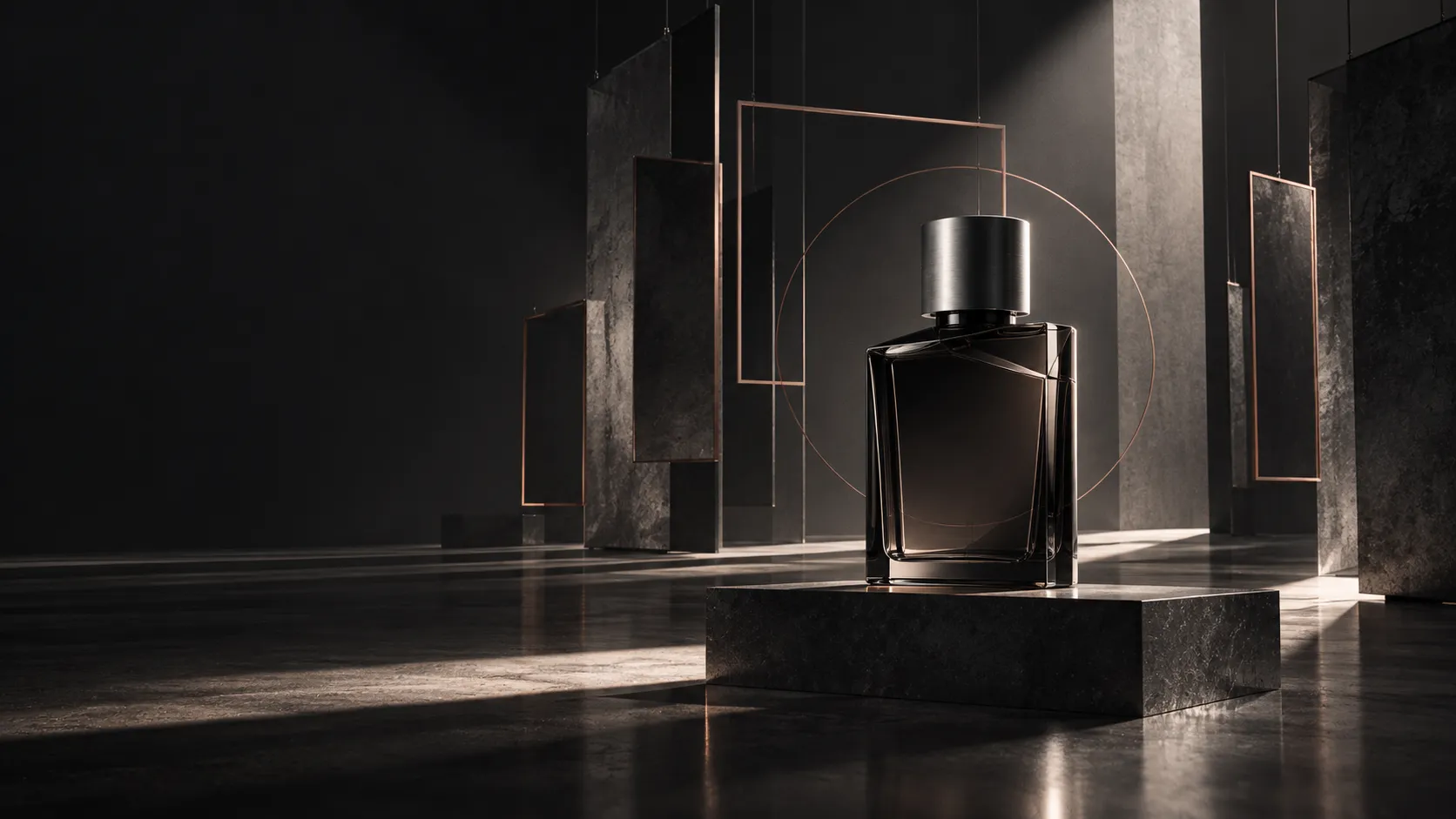
A product launch is a good example. On paper it may call for one hero image of the product. Underneath, the real objective might be to signal innovation, to make craftsmanship visible, to introduce a new design language or to move the product into a more premium position. Those are four different creative problems, and they lead to four different images. When the objective underneath stays vague, it is easy to produce something visually impressive that solves the wrong problem.
The same is true of the words briefs tend to rely on. Premium, bold, innovative, dynamic: useful, but still abstract. Does bold mean scale, contrast, colour, typography, motion or a severe camera angle? Does futuristic mean technological complexity, or extreme simplicity? What premium should mean is a question large enough for its own essay, The Art Director’s Eye. Whatever the word, I try to move away from adjectives as quickly as possible and towards relationships. What should the audience see first? What should they feel about the subject? What should stay with them once the image has gone, and what separates this project from others in its category?
Those questions are not yet creative decisions, but they make them possible, and once the problem is clear, production becomes far easier to direct.
The idea has to arrive before the style
There is a strong pull towards references at the start of a project: gather images, build a moodboard, choose colours, settle on a look, start experimenting. Each of these has its place. Each becomes a risk when it happens before the central idea is understood, because the references start making decisions before the idea does.
A project can become attractive very quickly without becoming conceptually strong, which is one reason so much reference-led work feels familiar. So I try to begin with research rather than references. Gathering references asks what the work should look like. Research asks what world the project belongs to: the product’s design language, materials, proportions and audience, the brand’s tone and history, the category it competes in. Inspiration might then come from architecture, cinema, industrial design, fashion or a physical material. The aim is context, not a collection of attractive images.
From that context, I look for the visual proposition: the single relationship, contrast, behaviour or perception that could organise the whole project. For one project it might be the tension between precision and softness; for another, monumental scale applied to a small object, stillness inside an energetic category, or an environment that behaves like an extension of the product. The strongest propositions can usually be said in one sentence. Complexity can come later, through execution; it should not come from an idea that is hard to grasp.
With a proposition in place, references can be judged against the idea rather than collected for their looks.
A system tells you more than a single image
A final image can hide weak thinking. A visual system exposes it. If an idea works from one angle, under one light and in one composition, it may not yet be a direction at all.
This is why I want to see early how the visual language behaves. What happens when the camera moves closer, or the subject becomes small in the frame? Does the light hold across several scenes, and in motion? How does typography enter? What stays constant, and what is allowed to change? At this stage a moodboard is less a collection of images than a set of rules: this is our light, this is our material language, this is our scale and level of contrast, this is how the camera behaves.
The test matters because few projects end as a single image. The same idea may need to work as a film, a social post, an outdoor poster or a vertical screen. A graphic idea may need to become spatial, a still composition a sequence, a product visualization a campaign environment. The aim is not one formula applied everywhere, but enough rules that different outputs read as the same thought. There, art direction moves from making images to building a system, the ground Building Brand Worlds covers at the scale of an identity.
Exploration is a way of asking questions
Exploration matters, but without a clear question it turns into endless variation: another camera, another material, another typeface, another light, another environment. The project grows busier without growing clearer.
I try to make every round of exploration answer something. Which framing gives the subject the right authority? Does the object need to feel tactile or precise? Should the environment disappear behind the subject or become part of the idea? Does motion need to reveal information or create atmosphere?
Those questions are best answered before anything is finished. Simple geometry, clay renders, basic light, rough animation and quick composition studies are enough to show whether the camera is strong, whether the silhouette works, whether the scale is right and whether the idea reads at once. Their purpose is not beauty. Keeping decision-making apart from finishing means problems surface while they still cost little to solve, creatively and technically.
Asking questions also changes the conversation around the work. “I prefer version B” becomes “version B feels more monumental, because the lower camera and the larger negative space increase its scale.” Preference turns into reasoning, and reasoning is a stronger basis for direction than taste alone.
A strong creative process does not simply produce more options. It progressively removes uncertainty.
The disciplines should shape each other early
A common mistake in multidisciplinary work is to treat the disciplines as stages in a queue: design, then CGI, then motion, then typography, then delivery. The order is convenient to manage, but it builds creative walls between people who should be informing one another.
Better work tends to come from letting them meet early. A motion idea can change how an object is designed. A CGI material test can shift the graphic palette. A camera move can reveal that a composition needs different proportions, and a typographic system can suggest a spatial structure.
The camera deserves one of those early decisions. Height, distance, focal length and perspective change how an object is perceived: some objects need authority, others intimacy, some symmetry, others a controlled three-quarter view. It is better to settle that before investing in detail the final frame may never show. A camera does not simply record a scene. It interprets it.
This is where a project becomes more interesting to me. The 3D work is not waiting for art direction to finish, motion is not waiting for the still to be approved, and design is not decorating the render afterwards. The disciplines develop together around one intention, and the result feels integrated rather than assembled. Why those connections matter beyond a single project is the subject of The Multidisciplinary Advantage.
Refinement is mostly subtraction
Early stages are about possibility. Later stages should be about precision, and at that point refinement is less a matter of adding polish than of finding contradictions.
Does the light say softness while the typography says aggression? Does the environment suggest luxury while the motion feels mechanical? Does the camera create drama that a quiet brand cannot carry? Is a striking reflection damaging the silhouette? Is an effect there because it strengthens the concept, or only because it was technically possible?
Production builds in layers: geometry, materials, light, environment, atmosphere, detail, graphic elements, and motion where it is needed. Each layer is a chance to support the direction or to drift from it. A more complex shader is not automatically better, and more lights or more geometry do not automatically make a better image. Light follows the same logic: some information should be visible, some suggested, and some allowed to disappear. The useful question throughout is simple: does this improve the frame?
This is also where craft matters most, because the stronger the direction, the less room execution has to weaken it. A poorly controlled material can undermine a careful composition. Inconsistent timing can change the character of a whole piece. Refinement brings every visible decision into alignment. It does not empty the work; it makes the intention easier to see.
The final frame should still hold the original idea
A project can become more sophisticated as it develops and still become weaker. It usually happens when execution starts to generate its own momentum. A new effect looks interesting, a lighting experiment looks beautiful, a transition feels impressive, a detail draws attention because it was difficult to make. Gradually, production starts deciding what the project is.
That is the moment to return to the original intention: not the first moldboard or the first sketch, but the idea underneath them. I find it helps to look at the work from several distances: the impression it makes in two seconds, the clarity of its hierarchy, the craft under close inspection, and finally whether it still answers the problem the brief was really about. That last view matters most, because after enough time inside a project it is easy to grow attached to the production itself.
The same view settles when a frame is finished. There is always another reflection, another texture, another render. At some point the useful question changes from what else could be improved to whether a change would meaningfully improve what the audience experiences. Refinement that no longer changes the communication has stopped being refinement.
The final frame should not look exactly like the first thought; development should improve it. But it should be the clearest expression of the idea, not the furthest distance from it.
Takeaway
No two projects follow quite the same route. A brand visualization does not develop like a product animation, and an anamorphic piece brings its own spatial questions. The principle underneath my art direction process stays the same: purpose to idea, idea to visual language, visual language to execution, execution to refinement. Technology supports that movement and craft strengthens it, but neither replaces the decisions that connect it.
The strongest visual projects are rarely built on one big creative decision. They are built from a sequence of smaller decisions that all point in the same direction. By the time the final frame appears, the viewer may never see those decisions individually. They simply feel that the image belongs together.
For me, that is how a process proves itself. As the work becomes more detailed, the intention becomes clearer, so that the final frame is not simply more polished than the original idea. It is its most resolved expression.
Mustafa WerekiaArt Director & 3D Generalist based in Dubai, working internationally across visual direction, CGI, motion and brand systems. About the practice.