CGI Is No Longer Just Production It’s Becoming a Creative Medium
CGI is often treated as the stage where a creative idea gets executed. Its more interesting role begins earlier, when three-dimensional thinking starts to influence the concept, the camera, the environment, the motion and what the idea is capable of becoming.
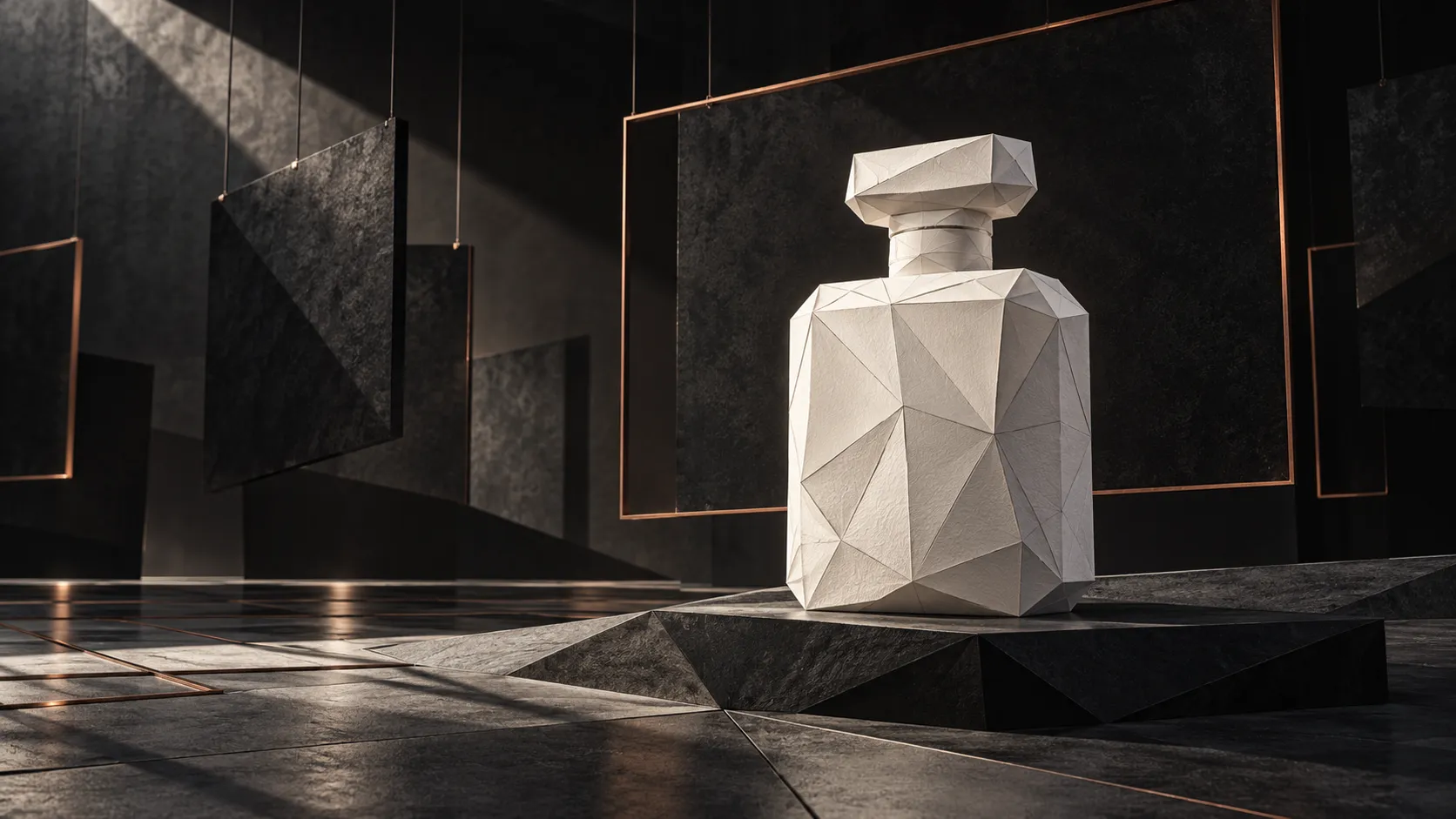
The short answerCGI becomes a creative medium when it enters the process before the idea is settled. A rough scene can test scale, a virtual camera can find a composition nobody drew, a material study can shift the visual language and motion can change how a concept is understood. Seen this way, the value of CGI as a creative medium is not unlimited freedom. It is directed possibility: the medium widens the options, and art direction decides which of them deserve to survive.
For a long time, CGI sat comfortably near the end of the creative process. The concept was developed, the campaign approved, the visual direction set, and then 3D was brought in to build what could not, or should not, be photographed.
That model still exists, and on many projects it is exactly right. But it no longer describes what the medium can do. CGI can now take part much earlier, while the idea is still forming, and when it does, the question around it changes. It is no longer only “How can CGI execute this concept?” It is also “What concepts become possible because CGI exists?”
That second question is what I mean by CGI as a creative medium. It does not make the craft of production any less important. It makes 3D one of the places where the answer can be found, not only the place where it is built.
Mustafa WerekiaArt Director & 3D Generalist
Production executes a decision. A medium can influence it
A production technique realises something that has already been decided. A creative medium can influence the decision itself. The difference sounds small, but it changes when, and how, a discipline is invited into a project.
Photography makes the point clearly. A photographer rarely receives a fully defined image and simply reproduces it. Lens, location, light, timing and the physical reality of the shoot all shape what the idea becomes. Film, illustration, typography and architecture behave in the same way: every medium leaves its mark on the ideas made with it.
CGI is no different, except that its range is unusually wide. Objects can change scale instantly. Materials can transform, architecture can move, gravity can be suspended, and the camera can go where no crew could follow. Treated only as a technical service, most of that potential goes unused. Considered early, it starts to shape the concept.
CGI becomes a creative medium when it starts influencing the idea, not simply executing it.
Three-dimensional thinking changes the idea
Working in 3D brings a different way of thinking about visual communication. A graphic composition starts with relationships across a surface. CGI adds depth: distance matters, camera position and lens matter, objects can hide one another, scale becomes something the viewer feels, and light can reveal information gradually. The environment can carry part of the narrative.
Motion adds a further dimension: time. An object can arrive, turn, transform or move through a space that responds to it, so the audience no longer receives the composition all at once. Movement also introduces behaviour, and behaviour carries meaning. Heavy objects are expected to move differently from light ones. A precise brand may need controlled timing; luxury often speaks through patience rather than speed. A product that rotates should do so because the movement expresses something, not only because rotation shows every side. What that shift asks of an art director is the subject of Still Image to Moving Experience.
The creative problem itself shifts. The work is no longer the design of a single frame but of relationships in space and time. That is why CGI should not always join a project after the concept is locked: the medium has its own grammar, and that grammar can contribute to the concept.
The virtual camera is a creative tool
The camera is one of the simplest places to see the difference. On a physical shoot, every camera decision meets a constraint: where the camera fits, which lens is available, whether the set supports the angle, whether a rig can make the move. Those limits often produce excellent decisions. A virtual scene removes many of them. The camera can sit almost anywhere, begin inside an object, pass through microscopic detail, or move from the scale of a component to the scale of a building.
That freedom raises an awkward question. If the camera can do almost anything, why should it do anything? An impossible move is not valuable because it is technically possible; it is valuable only if it strengthens the idea. Movement still needs a motive, perspective a purpose and scale a meaning.
Used with that discipline, the virtual camera becomes a way of investigating perception. A viewpoint slightly below an object lends it authority. Coming very close turns a familiar product into a landscape of material and detail. Pulling far back hands the meaning to the environment. Compressed perspective flattens geometry towards graphics, while a wide lens makes space dramatic. Instead of a frame decided on paper and recreated, the frame can emerge from exploring inside the scene, which is a different relationship between direction and production.
Realism is one capability, not the brief
One of the most important shifts in how I think about CGI is that realism is only one of its capabilities. It is a vital one. Photorealistic CGI makes it possible to show products before they are manufactured, spaces before they are built, and images that would be difficult or impossible to photograph. Why realism on its own still leaves the most important questions open is taken up in Why Photorealism Alone Is Not Enough.
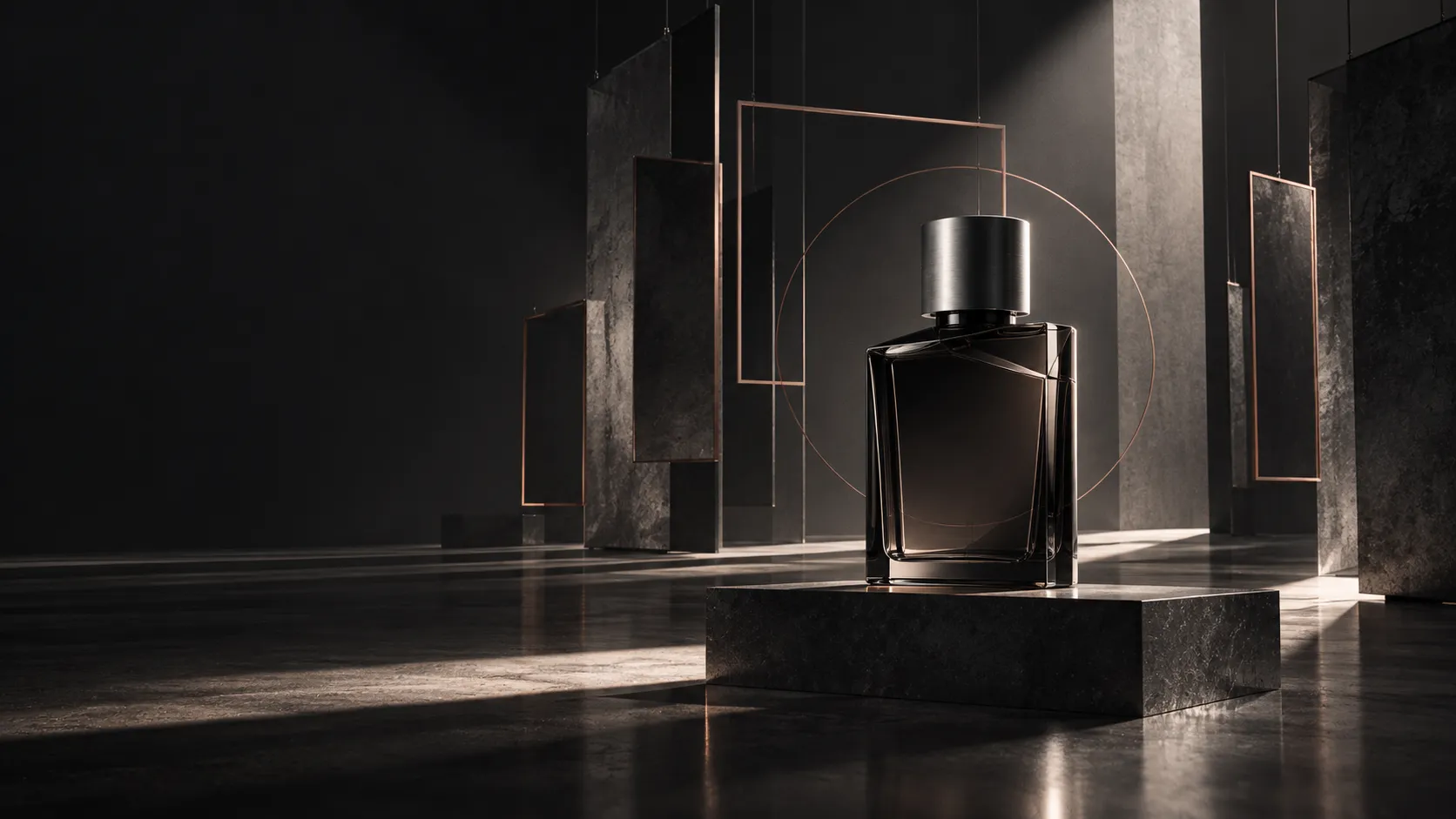
But realism should not become a creative limit. CGI is at its most interesting when it starts from reality and asks what could change. A perfume bottle can become architecture. A piece of fabric can become a landscape. A metallic surface can expand into an entire environment, typography can occupy physical space, and scale can become emotional rather than literal. The result may still look entirely believable without behaving like the physical world.
Impossible does not mean random. Because CGI allows almost anything, there is a constant temptation to use everything: more simulation, more particles, more distortion, more reflections, more camera movement. A convincing impossible world still has rules. How does gravity behave here? Which materials belong? How quickly do things move, which scale relationships are intended, how does light behave, and what should feel real against what should feel invented? Surreal imagery tends to persuade precisely when it follows an internal logic.
The product can become the world
Traditional production often begins with a location or a set, and the product is placed inside it. CGI allows the relationship to run the other way: the world can begin with the idea. If a product needs to feel monumental, the architecture can be designed around that perception. If a brand needs to communicate precision, proportion, repetition and light can carry it. A reflective floor can amplify symmetry, a narrow opening can direct the eye, and a vast empty space can make a small object feel significant.
The product itself can also generate its surroundings. Its geometry can inform the architecture, its material can define the surfaces around it, its palette can set the atmosphere, its details can become landscapes and its engineering can become animation. The question moves from “Where should the product be placed?” to “What kind of world would this product create?” At that point product visualization stops being presentation and becomes storytelling.
The same thinking applies to identity. A brand’s colours can become a lighting system, its forms architecture, its graphic language space, its motion principles the way objects behave. The result is larger than a collection of branded assets. It is a recognisable world, the subject Building Brand Worlds takes further.
Making is part of the thinking
Treating CGI as a medium also means that not every experiment has to survive. If every 3D study must justify itself as a deliverable, experimentation becomes conservative. A rough scene can answer useful questions quickly. Does this scale relationship work? Should the object feel isolated or surrounded? Can this brand language become spatial? Would an impossible transformation make the concept clearer, or only more spectacular?
Some studies fail, and that is part of their value: they remove weak directions before those directions become expensive. Others reveal something nobody planned. A lighting test becomes the campaign idea. A camera study finds the hero composition. A material test sets the atmosphere of the whole project.
When that happens often enough, CGI begins to influence the brief itself. Instead of “create a 3D version of this approved concept”, the conversation becomes “how could CGI communicate this product differently?” The answer might be an impossible material transformation, a spatial illusion, a tightly controlled photorealistic film, or CGI as one layer in a larger mixed-media piece. Physical and digital are not opposites. The useful question is not which one, but which combination best serves the idea.
It changes the role of the 3D artist too. Accurate modelling, convincing materials and reliable delivery remain essential. But once CGI enters the thinking, composition, storytelling, brand understanding and the ability to propose rather than only execute matter as much. Technical skill answers “Can we make it?” Creative judgement answers “Should we make it this way?” For an art director who also works in 3D, the scene is not only where decisions are carried out. It is one of the places where they are made.
More possibility makes art direction more important
The opportunity brings a matching problem: there is almost always another option. Another material, another camera, another environment, another effect, another simulation, another way to make the image more spectacular. Faster tools sharpen this. As the distance between an idea and seeing it on screen shrinks, more directions can be tested, and iteration becomes part of ideation.
Possibility is not direction. In digital production, capability can easily start driving the work. A complex simulation becomes central because it was difficult to build. An impossible camera move stays because it shows what the technology can do. A scene gathers complexity because each new element looks interesting on its own. The result can be impressive and conceptually weak.
This is why CGI becoming a creative medium does not reduce the importance of art direction. It increases it. The more possibilities the medium opens, the more selection matters: which possibility belongs to the idea, which strengthens the perception, which supports the brand, and which should quietly be removed.
Takeaway
CGI is still production. It still depends on craft, technical understanding, precision and disciplined execution, and without them ideas remain ideas. But describing it only as production misses much of its value. Space can shape composition, virtual cameras can shape perspective, materials can suggest concepts, environments can become ideas, and experiments can reveal directions that did not exist before the work began.
It changes the people around it as well. A creative director can think spatially, a designer cinematically and a 3D artist conceptually, and the work can grow from collaboration rather than a fixed sequence of disciplines.
For me, CGI is most interesting not when it imitates what already exists, and not when it shows how much technology can do, but when it lets us imagine something that could not have been conceived in quite the same way without it. The most interesting CGI no longer asks only “How do we make this?” It asks “What becomes possible because we can?”
Mustafa WerekiaArt Director & 3D Generalist based in Dubai, working internationally across visual direction, CGI, motion and brand systems. About the practice.